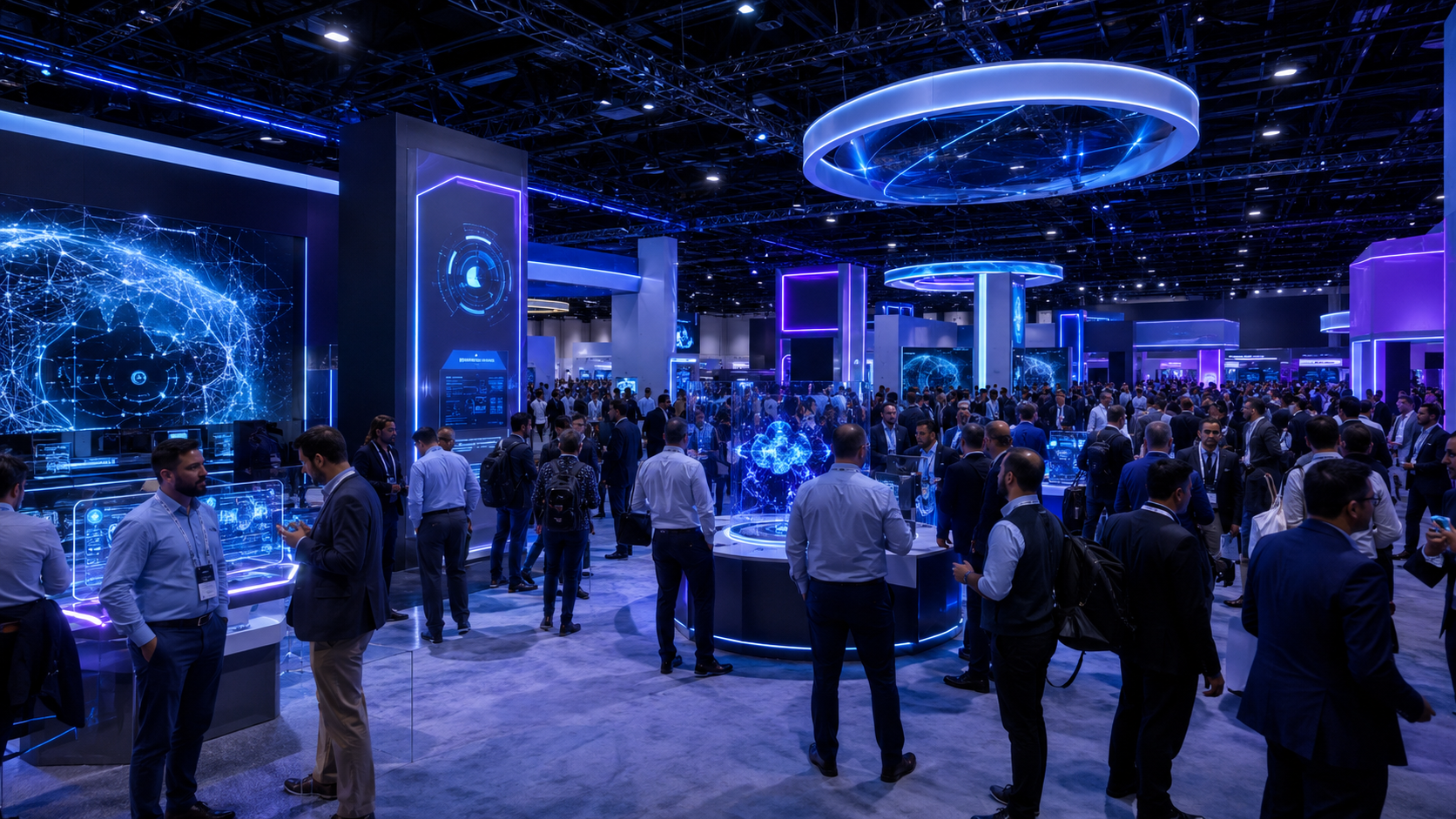
Las Vegas, August 5, 2026. The third official day of Black Hat USA 2026, at Mandalay Bay, concentrated more than 50 Briefing sessions, Arsenal demonstrations, and a dense schedule of events for security leaders, researchers, and startups. The central axis was AI agent security, cyber resilience, and automation.
Past the networking, what remains for anyone running security in a real environment is a set of research that targets exactly the silent assumptions of daily work. Four Briefing sessions deserve a direct translation into your reality.
C and Its Consequences: the compiler can undo your fix
The session "C and Its Consequences: The Source Is Just a Suggestion" showed how defensive coding patterns can be subverted by the compiler itself. During optimization, the compiler reorganizes, reorders, and eliminates code it judges redundant. The result is that a check written in the source code may simply not exist in the final binary.
The classic case is the TOCTOU race condition (Time-Of-Check to Time-Of-Use): you validate a condition at one instant and use it the next, assuming nothing changed in between. When the compiler separates, reorders, or removes the check because it sees no observable effect, it opens a window for the state to change between the check and the use. A recurring example is code that zeroes a password buffer after use; the compiler, seeing the variable will not be read again, eliminates the cleanup as a dead store, and the secret stays in memory.
The practical lesson: source code review and binary testing are not the same activity. Auditing only what is written leaves out what the toolchain actually produces. Assessments that combine code analysis with verification of the compiled artifact find exactly this category of flaw that the human reviewer never sees, because it is not in the code they read.
Service account token theft: the short path inside Kubernetes
The demonstration "Service Account Token Theft k8s/OpenShift Demo", presented by Sean Rickerd of Red Hat, addressed one of the most efficient vectors in orchestrated environments. In Kubernetes and OpenShift, each pod usually receives a service account token mounted inside the container. That token is a credential for the API server.
The chain we exploit in this kind of environment is direct: the attacker compromises an exposed application and gains execution inside a pod. From there, they read the token mounted in the container's filesystem. If that service account has broad RBAC permissions, and it often does, due to permissive configuration or default accounts, the token stops being access to a pod and becomes access to the cluster: listing secrets, creating new pods, reaching other namespaces, escalating privileges.
The controls we validate in this scenario are concrete: RBAC with real least privilege per service account, disabling automatic token mounting where the application does not need it, segregating namespaces with network policies, and monitoring anomalous calls to the API server. The difference between a cluster that resists and one that hands over everything rarely lies in the Kubernetes version, and almost always lies in these settings.
Ransomware detection through math, and AI guardrails that go beyond the vibe check
Two other sessions point in the same direction: replacing subjective impression with a verifiable measure.
"Practical Ransomware Detection on macOS (via Math, not AI)" presented detection based on statistical properties of encryption behavior, such as the abrupt rise in entropy across files written in sequence, without relying on a trained model. It is a reminder that robust detection often rests on deterministic and explainable signals, not on a black box.
"Closed Loop AI Security" addressed evaluating AI guardrails in a systematic way, going beyond the vibe check, that informal test where someone chats with the model, fails to break it in five minutes, and declares the control safe. A guardrail must be tested with a reproducible set of adversarial cases, with a bypass rate metric and a retest after each adjustment. It is the same discipline as a pentest applied to the AI layer: hypothesis, controlled attack, evidence, fix, new test.
Arsenal and Business Hall: tools worth tracking
The Arsenal continued with open-source tool demonstrations. Among them, "Obscurize: Malware for Defense and Counter Offense" and "ICSForge: OT/ICS Security Coverage Validation Platform", the latter aimed at validating security coverage in industrial and operational technology environments, where a poorly calibrated test can affect a physical process. In the Business Hall, the Lab in the Business Hall put researchers answering questions about their tools in real time.
The pattern of the day: an untested assumption is security debt
The four core research pieces of Day 5 share a common thread. The code you reviewed may not be what runs. The token that looks harmless may be the cluster key. The detection that seems to work may never have been measured. The guardrail that survived one conversation may fall to the first structured adversarial case.
Three checks deserve an honest review in your environment:
- Do your security tests evaluate the binary and runtime behavior, or do they stop at reading the source code?
- Has each service account in your cluster been audited against least-privilege RBAC, and is automatic token mounting disabled where it is not needed?
- Do your AI guardrails and detection rules have a reproducible effectiveness metric, or were they approved by impression?
Antisec works exactly at this contact point between assumption and evidence, across Red Team, Pentest, Blue Team, DevSecOps, and vCISO, for over two decades. If the research presented described technologies running in your environment, the next step is to measure where your reality diverges from what the documentation assumes. Talk to our team and turn these hypotheses into a test plan with verifiable results.